The Ultimate Guide to Cleaning Exposed Aggregate Concrete
Exposed aggregate concrete is a https://telegra.ph/How-to-Prevent-Slips-and-Falls-on-Wet-Outdoor-Surfaces-11-22 practical choice for Darwin driveways, paths, patios and pool surrounds. Its textured finish provides traction, but the spaces between stones also collect dirt, leaf debris and organic growth. Darwin’s humidity, wet-season rainfall and strong sunshine make regular maintenance particularly useful.
The safest approach is to start gently, use a cleaner suited to the stain and avoid excessive pressure. Aggressive cleaning can loosen stones, erode the cement around them or strip an existing sealer.
Why Darwin Conditions Affect Your Cleaning Routine
During the wet season, shaded or poorly drained concrete can develop slippery algae and other organic growth. In the dry season, dust and windblown debris accumulate in the textured surface. Leaves, soil and vehicle leaks can also leave stubborn stains.
Inspect high-traffic areas regularly, especially steps, sloping driveways and pool surrounds. Clean slippery patches promptly rather than waiting for a scheduled deep clean. If growth returns quickly, check for blocked drainage, leaking irrigation or persistent shade.
Check the Surface Before You Start
Look for cracks, loose stones, crumbling cement and peeling sealer. Damaged areas need assessment before pressure cleaning because water can worsen existing deterioration. If the concrete is newly installed, follow the installer’s curing and maintenance instructions.
Check whether the surface has a sealer and, where possible, identify the product. Some chemicals can dull or soften coatings. Test your cleaner and cleaning method in an inconspicuous area first.
How to Clean Exposed Aggregate Concrete
- Clear and sweep the area. Move furniture, pots and vehicles, then remove loose grit and leaves with a stiff nylon broom. Avoid wire brushes, which can scratch the surface or leave metal particles that rust.
- Plan for runoff. Protect nearby plants and prevent dirty water, sediment and cleaning chemicals from entering stormwater drains. Use suitable containment and collection methods where needed.
- Apply a suitable cleaner. Choose a product labelled for concrete and compatible with any existing sealer. Follow its dilution and application instructions. If directed, pre-wet the surface before applying.
- Scrub and allow the recommended dwell time. Work the cleaner into the texture with a nylon brush. Keep it from drying on the concrete, particularly in Darwin’s heat.
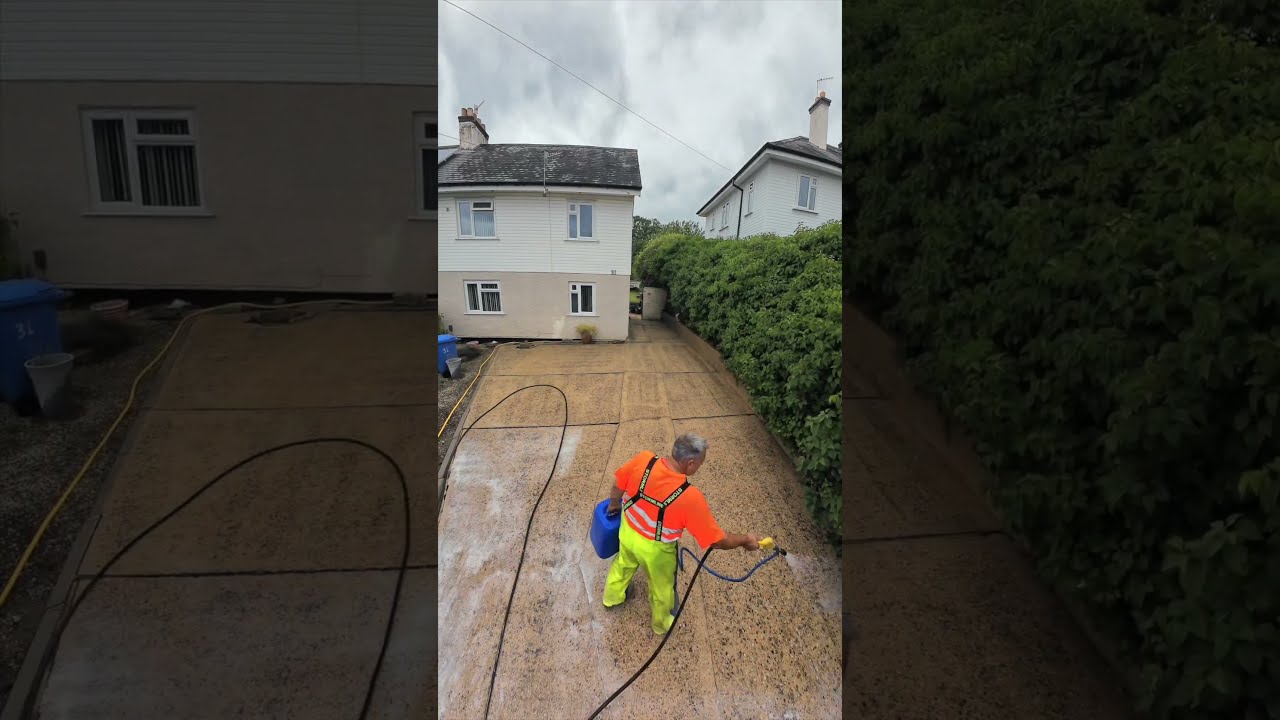
- Rinse thoroughly. Start with a garden hose. If pressure washing is necessary, use a broad fan spray, the lowest effective pressure and a generous working distance.
- Inspect once dry. Check for remaining stains, loose aggregate or coating damage before repeating treatment or considering resealing.
Can You Pressure Wash Exposed Aggregate?
Yes, provided the concrete is sound and the equipment is used carefully. There is no single pressure setting that suits every exposed aggregate surface: age, condition, sealer and nozzle choice all matter.
Keep the nozzle moving and avoid directing concentrated spray at cracks, joints or loose stones. Never use a pinpoint jet. A compatible surface-cleaning attachment can help produce an even finish, but incorrect pressure or technique can still cause damage.
If sand, cement particles or stones start coming away, stop immediately. Older or deteriorating concrete may need a gentler method or professional assessment.
How to Treat Common Stains
Oil and Grease
For fresh spills, use an absorbent material first and collect it for appropriate disposal. Apply a concrete-compatible degreaser according to its label, scrub and collect the contaminated wash water. Older oil stains may require repeated treatment or a specialist poultice, and complete removal is not always possible.
Algae and Organic Growth
Use a treatment specifically labelled for algae or organic growth on concrete. Observe its safety directions, contact time and plant-protection requirements. Scrubbing helps remove surface growth, while improving drainage can reduce recurrence.
Never mix cleaning chemicals. In particular, chlorine-based products must not be mixed with acids or ammonia because dangerous gases can form.
Rust, Leaf Marks and Mineral Deposits
Choose a stain-specific product that is suitable for both the concrete and its aggregate. Acidic cleaners can etch cement, damage some decorative stones and affect sealers. Avoid improvised acid washing; persistent rust or mineral deposits are better assessed by a professional.
Cleaning Safely in Darwin’s Climate
Choose a cooler part of the day and avoid cleaning when rain is likely to wash chemicals away. Hot concrete can make products dry too quickly, leaving residue or uneven results.
- Wear enclosed, slip-resistant footwear, gloves and the eye protection specified by the product label.
- Keep children, pets and pedestrians away from wet surfaces and cleaning equipment.
- Protect garden beds and nearby metalwork from overspray.
- Check current City of Darwin and Northern Territory guidance for stormwater protection, wastewater disposal and any applicable water restrictions.
Should You Reseal After Cleaning?
Not every clean requires resealing. Consider it when an existing coating is worn or the surface is becoming harder to keep clean. Sealer choice depends on the previous coating, desired appearance, moisture conditions and slip-resistance requirements.
Film-forming sealers can become slippery when wet, especially around pools and on slopes. Ask about a suitable slip-resistant system rather than choosing on appearance alone. Apply only when the concrete meets the manufacturer’s dryness requirements and the forecast provides enough time for curing.
When to Call a Darwin Concrete Cleaning Service
Professional help is worthwhile for large areas, persistent stains, deteriorating surfaces or sites where wash-water recovery is difficult. Ask how the contractor protects exposed aggregate, checks sealer compatibility and manages runoff.
Between deeper cleans, sweep regularly, remove spills quickly and keep drains clear. These simple habits help preserve the textured finish and reduce slippery buildup through Darwin’s wet and dry seasons.

Darwin Pressure Cleaning
(08) 8931 2278
Ends · REIDVLXM573